
Our signature program portfolio raises awareness of loneliness and reduces stigma through arts-based experiences that engage, inspire, empower, and connect your community.

In just three minutes, learn how art reduces stress, boosts resilience, and builds connection.
Raising awareness of urgent health issues and advocating for creative expression as a solution is critical to fulfilling The Foundation for Art & Healing’s mission.

Subscribe to our newsletter for twice-monthly film recommendations, event updates, and ways to engage at the intersection of arts and health.

If you’re a campus leader planning for next school year, your orientation calendar is probably already packed with sessions on course selection, campus safety, extracurriculars, AI policies, and more. There’s so much content to cover—and somewhere in that mix, you’re also trying to create a real sense of connection and belonging. That’s not easy to do all at once!
That’s why it can help to think of orientation as one of many opportunities to boost students’ sense of belonging. Together, the first ten weeks of the school year help set the tone for new students’ social, emotional, and academic experiences on campus. When you plan not just for orientation but also for those early weeks, you create space for meaningful connection—without overloading students’ schedules on day one.
And you don’t have to start from scratch! We’ve created a list of recommendations organized by role: ideas for RAs, Student Wellness Pros, and Professors. Read on for practical tips you can use to foster student connection during orientation and in the weeks and months that follow.
Here’s how you can build a 10-week “connection streak” using simple, creative, and evidence-based approaches—from workshops to pop-ups and more.

It’s easy to assume that students will make meaningful connections over time. But research tells a different story. According to this Healthy Minds Study, more than 50% of college students report feeling lonely, left out, or disconnected. And this trend is on the rise. As Jeremy Nobel, MD, MPH shared in an article titled “Overcoming Student Loneliness” for The Chronicle of Higher Education, “To the extent we can measure it, loneliness is increasing.” As loneliness increases, so do the risks to student health, wellbeing and success.
There’s no quick fix to the campus loneliness crisis. But the good news is that there are practical, research-backed ways to help students better connect with themselves and others. Creative expression is one of them! Arts-based activities at any skill level can lower cortisol levels, boost feel-good hormones, and activate the same parts of the brain involved in social interactions, paving the way for compassion and connection.
The Foundation for Art & Healing’s Campus UnLonely programs bring the power of creativity and connection to life. By combining mindfulness, creative engagement, and guided conversation, these workshops spark authentic connection, helping students engage more openly with their thoughts, feelings, and peers. These workshops are designed for anyone to facilitate: staff, faculty, student leaders, and more.
Let’s explore what arts-based connection programs can look like in practice.

Campus Colors & Connection “Quilt”
Host a Creativity Night
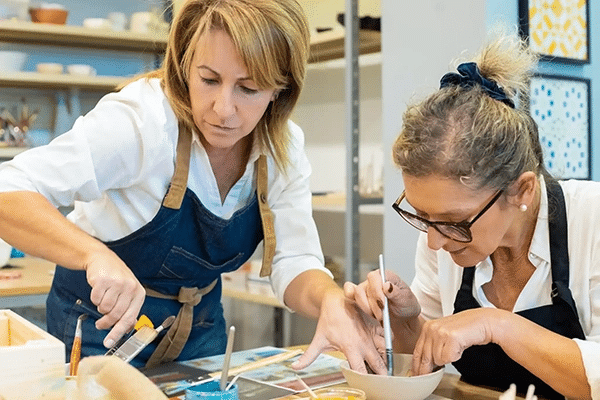
Give students a chance to unwind and connect in a fun, supportive environment. Use our workshops, which integrate simple mindfulness exercises, expressive coloring or writing prompts, and small-group conversations to spark more authentic connections than typical icebreakers. One of our workshop participants said, “I feel like color and abstract drawings help me to express things I cannot express in words.”
Bring creativity into RA meetings
Set the tone for connection with your fellow RAs! Try activities from the CreativityHub, like building a community playlist, creating gratitude trees, or collaborating on a group painting. You’ll feel more relaxed, engaged, and connected as a group.
Screen short films and start conversations
Project UnLonely Films offer powerful, relatable stories about loneliness and connection. Stream your choice of 150+ short films and facilitate a discussion about it, encouraging students to share what resonated with them. You’ll reduce stigma around loneliness while helping participants feel more connected.
Marissa Birne, Associate Director of Education at the University of Vermont Center on Aging, has hosted multiple film screenings for students and community members. She shared that the screenings have “inspired thoughtful dialogue about the need to reach out and connect with others, even when it’s difficult.”

Intergenerational Project UnLonely Films Screening at UVM
Offer creative study breaks
Arts-based activities like our Campus Colors & Connection workshop are a wonderful way to help students pause, reflect, and connect. Show students the power of mindfulness, creative expression, and conversation to improve their sense of belonging on campus. In the words of one workshop participant, “So fun! The art portion was my favorite part. I feel so chilled out now.”
Lead an orientation workshop
Students’ first week or two on campus can feel overwhelming, but dedicated creativity and connection sessions can help them unwind while learning about wellness resources on campus.
Dr. Shane Long, Assistant Dean of Students at the University of New England, led a Campus Colors & Connection workshop at UNE Orientation. He shared, “Art was a great way to engage these students in a quiet time in the middle of a really busy day of orientation programming, enabling them to pause, reflect, and connect with peers.”
Empower students with arts-based resources
Share our CreativityHub or Project UnLonely Films collection via QR codes, student wellness newsletters, or social media channels. Encourage students to swap a few minutes of scrolling for a quick creativity break that supports their wellbeing.
Set up pop-up creativity stations
Bring art-making into everyday campus spaces like libraries, dining halls, and student centers. Pop-ups can be a great way to engage with students in the flow of their day, helping them better understand loneliness, make new connections, and learn more about student wellness resources.

Dr. Shane Long with Colors & Connection participants at UNE Orientation
Incorporate creative activities into first-year courses
It’s easy to feel anonymous in a large, introductory class. But arts-based activities like our Campus Colors & Connection workshop can help students feel seen, heard, and understood. The workshop takes 45 minutes and integrates mindfulness, expressive coloring, and pair-sharing to inspire authentic 1:1 connections.
Take your next meeting to a museum
Try meeting with colleagues at an art museum, either on campus or in your local community. Appreciating art can boost your mood and catalyze new ideas, conversations, and connections.
Start a book club
Invite your students or colleagues to read Project UnLonely: Healing Our Crisis of Disconnection by Jeremy Nobel, MD, MPH. The book offers an accessible way to better understand what loneliness is, why it’s nothing to be ashamed of, and how creative activities can foster a greater sense of connection and belonging. Use our book club discussion guide, developed by a college student on our Young Adult Advisory Council, to spark meaningful conversations along the way.

Image Credit: Avery Books
Connection doesn’t happen in a single moment—it builds over time. By weaving simple creative experiences into the first ten weeks of the semester, you can help students feel more connected and supported as the year goes on.
No matter your role on campus, you can bring our Campus UnLonely programs to your community in the fall. Join 60+ campuses using the power of creative expression to help students connect. No special skills or certifications are required to become a facilitator—just one 90-minute training session delivered online. Facilitators can be staff, faculty, or even other students!
As Dr. Long shared, “Campus Colors & Connection is a really fun workshop to facilitate. It’s a great way to engage students in the idea of connecting with each other and thinking about loneliness, and it’s a very easy program to learn as a facilitator. The materials that we were provided were really helpful.”
To bring Campus UnLonely to your school, visit our website and register for a free information session, or simply email [email protected]. Together, we can help students build meaningful connections in those first ten weeks and beyond.